Welcome to your introduction to Exercise Science - a space dedicated to understanding the “why” behind how we train. This page breaks down the principles that govern movement, strength, endurance, and physical adaptation in a clear and practical way. By learning how the body responds to exercise, you’ll be able to train more effectively, avoid guesswork, and make informed decisions that support your goals. Whether you’re a beginner or looking to deepen your knowledge, this is where science meets smarter training.
Resistance Training is a form of exercise that forces muscles to contract against an external resistance.
Sometimes referred to as weight training or strength training, resistance training aims to increase muscular strength, mass and endurance.
One Repetition Maximum (1RM) refers to the maximum weight at which only one repetition of an exercise can be performed with correct technique. If technique fails, it is not considered a repetition.
Prior to starting a resistance training program, it is import to know your 1RM of all the primary and accessory exercises as weights are often based on a percentage of your 1RM.
Aerobic simply means to require oxygen. Aerobic exercise is any type of prolonged activity that increases heart rate and breathing.
Aerobic exercise could simply be walking, jogging or swimming. Other forms of aerobic exercise may be long distance running, Fartlek Training, cycling or rowing.
Aerobic exercise strengthens the hearts, increases HDL cholesterol and burns calories. It also improves the maximum amount of oxygen the body can use during exercise (VO2Max).
Anaerobic simply means to not require oxygen. Anaerobic exercise consists of high-intensity, intermittent bouts of exercise that do not drastically increase heart rate or breathing.
Anaerobic exercise could be weight training, plyometric drills, speed and agility training or interval training.
Anaerobic exercise shows improvements in muscular strength, power, hypertrophy, endurance and motor skill performance.
Power Training focuses on increasing the speed of muscle contraction to produce more explosive force.
Commonly used power exercises include the power clean, power snatch, push press, push jerk and split jerk.
Power Training often consists of performing these exercises at low repetitions for many sets at a high percentage of your 1RM.
Power Training improves muscular strength, explosive power and athletic performance.
It increases lean muscle mass, improves metabolism, bone density and joint stability leading to decreased injury risk.
Power training decreases age-related muscle-loss, improves balance and supports cardiovascular health.
Plyometrics is a form of exercise that allows the muscle to reach maximal force in the shortest possible time.
Plyometric exercises are quick, powerful movements that use a pre-stretch or counter movement to elicit the response of the stretch-shortening cycle.
The purpose of plyometrics is to increase the power of the movement by using the natural elastic components of the muscle and tendon.
Plyometric exercises include jumping, hopping, skipping and bounding.
Plyometrics Training improves explosive power and athletic performance as well increasing the size and strength
of tendons and ligaments.
Plyometrics increases the elasticity of the muscle aiding in injury prevention and improving jumping
and throwing abilities.
Regular plyometrics training can also improve bone density, joint stability and muscular strength.
Strength Training focuses on improving muscular strength by increasing the tensile strength of the muscle. By improving the tensile strength of the muscle, the muscle can produce more force.
Commonly used exercises for strength include the squat, deadlift bench press and bent-over row.
Strength Training consists of performing these exercises at low repetitions for moderate to high sets at a high percentage of your 1RM.
Strength Training has a host benefits including increased muscular strength, muscle mass joint health and bone density.
Regular strength training improves functional mobility, reduces injury risk, lowers blood pressure and improves the management of chronic diseases like diabetes.
As we age, it is important to maintain a healthy strength base to decrease age-related muscle loss and subsequent injuries.
Hypertrophy Training focuses on increasing the mass of the muscle to gain size. The muscle is placed under stress to cause small tears in the muscle fibers that are then repaired to increase the size of the muscle.
Commonly used exercises for hypertrophy include the squat, deadlift, bench press and bent-over row.
Hypertrophy Training consists of performing these exercises at moderate to high repetitions for moderate to low sets at a moderate to high percentage of your 1RM.
Hypertrophy Training has a host of benefits including increased muscle mass, strength and endurance, as well as improved joint and bone health.
Increased muscle mass improves metabolism and burns more calories, thereby aiding in maintaining a
healthy weight.
Regular hypertrophy training also improves insulin sensitivity and glucose control and may be beneficial for
Type 2 Diabetes.
Endurance Training focuses on improving the endurance capacity of the muscle to sustain prolonged exercise. The muscle is placed under moderate stress for a longer period to cause the muscle to adapt to extended periods of work.
Commonly used exercises for endurance include the squat, deadlift, bench press
and bent-over row. However, other core and accessory exercises can also be used.
Endurance Training consists of performing these exercises at high repetitions for moderate sets at a moderate to low percentage of your 1RM.
Endurance Training provides a host benefits including improved function of the cardiovascular and respiratory systems, increased metabolism, and improved stamina.
It reduces the risk of heart disease and chronic diseases like Type 2 Diabetes, as well as helps to maintain a healthy weight.
Regular endurance training improves muscular strength and enhances the body's ability to produce energy.
Structuring your workout depends on your goals but there are a few suggestions for maximizing the benefits of your workout.
It is important to warm-up before every workout. The hardest exercises should be done at the start of your workout to prevent performing under neural fatigue.
Cardio and core exercises should be left until the end of your workout as these are often low-intensity and require less focus.
Complex movements should be performed at the start of the workout as they cause neural fatigue and require the most amount of focus and energy to be performed correctly.
Throughout your workout, your nerves and muscles become tired. Therefore performing compound movements like squats, deadlifts, bench press and bent-over rows become more difficult and technique may begin to fail.
Always warm-up the areas you will be training before a workout and don't forget to perform warm-up sets.
Power exercises such as power cleans, power snatches, push press, push jerk and split jerk require a lot of technique and focus.
As the workout progresses, the muscles and nerves will become fatigued. Trying to perform complex exercises under neural fatigue can lead to injury or poor performance.
It is important to perform power exercises at the start of workout if they are included in your program. It is not suggested to do power training and strength training in the same session.
Cardio exercises fatigue the muscles and neural systems. As lifting exercises are often quite complex and require a large recruitment of Type 1 muscle fibers, being in a state of fatigue will affect your ability to lift and perform.
Complex exercises also elicit a high muscle fiber recruitment. As the muscle fibers are already recruited and fatigued, it is beneficial to then train their ability to endure.
Core muscles are used throughout every exercise. They are required for stability, to produce movement and to produce force.
While warming-up with a few core exercises is beneficial for activation of the core muscles, it is also beneficial to train the core under fatigue.
Core exercises often require less focus and are of a lower-intensity. Fatiguing the core muscles prior to complex
exercises may cause technique to decrease and result in poor
performance.
Pre-habilitation for exercise focuses on preventing injury by performing exercises that strengthen common injury sites, improve stability and enhance joint mobility before injury occurs.
Pre-habilitation is extremely beneficial for athletes to reduce risk of injury, but can also be beneficial for the general population.
Pre-habilitation prior to surgery is also beneficial for recovery. However, this is prescribed by physiotherapists and
biokineticists and falls out of the scope for exercise scientists.
Warm-up prior to exercise is vital as it prepare the muscles and neural pathways for exercise.
Warm-up increases blood flow to the muscle, excites neural pathways, increases muscle activation and recruitment, and prepares the joints
for loading.
A warm-up may consist of dynamic mobility drills, core activation exercises,
ballistic movements or performing an exercise at a lower weight to prepare
for heavier loading.
Cool-down prior to exercise aids in recovery from exercise and may decrease muscle soreness.
Cool-down decreases blood flow to the muscle, relaxes the muscle, decreases heart rate and regulates breathing. It is often good to rehydrate following exercise as well.
A cool-down may consist of static stretching exercise, foam-rolling to reduce muscle tension or controlled breathing exercises.
A superset is a set of two exercises that are performed back-to-back with no rest in between that target opposing muscle groups.
Often used in Strength Training, a superset targets opposite muscle groups to allow one group to work while the other rests which increases functionality and improves efficiency.
An example of a superset may be performing a bench press and then performing single-arm rows directly after.
A compound set is a set of two exercises performed back-to-back with no rest in between that target the same group of muscles.
Often used in hypertrophy, a compound set imposes stress on the same muscle group of muscles to maximize muscle fiber damage which is
subsequently repaired to increase muscle mass.
An example of a compound set may be performing bicep curls and then performing hammer curls directly after.
An isometric contraction is when the muscle contracts without lengthening or shortening.
Exercises such a single-leg balances, planks, side planks and glute bridge holds all utilize an isometric contraction.
Once in the holding position, the muscle is no longer lengthening or shortening during the contraction.
Isometric exercises increase strength, improve stability and enhance muscle endurance. They are low-impact, time-efficient and often aid in rehabilitation.
A concentric contraction is when the muscle shortens while it produces force.
During the upward phase of a bicep curl, the muscle is shortening under tension produce force to lift the weight.
During the downward phase, the muscle is then lengthening under tension to stabilize the weight as it goes down.
Concentric exercises increase muscular strength, power and mass.
An eccentric contraction is when the muscle lengthens under tension to produce force.
During the upward phase of a deadlift, the hamstring muscles are shortening as they contract to produce force.
During the downward phase, the muscle is then lengthening under tension to stabilize the weight as it goes down.
Many people disregard the importance of eccentric contractions during exercise but they are shown to improve
strength, flexibility, tendon health and decrease injury risk.
All body movements involve the action of more than one muscle.
The muscle most involved in a movement is considered the agonist muscle. The opposing muscle is considered the antagonist muscle.
As an agonist muscle contracts, the antagonist muscle stabilizes the
joint through the movement and stretches to allow the movement to occur.
An example of agonist and antagonist muscles are the biceps and triceps. As the bicep contracts to perform an
exercise, the triceps will stabilize and stretch to support the movement.
The PSHE Method describes the basic training principles for
Power, Strength, Hypertrophy and Endurance Training.
The PSHE Method provides repetition and sets ranges, as well as adequate load and rest intervals to maximize the benefits of a resistance training workout.
Load is based on a percentage of your one-repetition maximum and the repetitions and set ranges provided have been scientifically proven to maximize results.
Compound training is highly beneficial for increasing strength as it works multiple muscle groups and joints simultaneously.
Not to be confused with compound sets, compound training involves exercises such as squats, deadlifts, bench press, and bent-over row.
These exercises increase muscle co-ordination, improve functionality of the body and improve the efficiency of your workout when compared to isolation training.
Isolation training involves targeting a single muscle group by only moving one joint.
Exercises such as bicep curls, hamstring curls and leg extensions isolate specific muscle groups to increase the stress load placed on that specific muscle.
Isolation training is highly beneficial for hypertrophy as it increases muscle fiber damage to a specific
muscle which subsequently leads to increased muscle mass after recovery.
Performing exercises with
correct technique is vital to maintain muscular balance, maximize strength gains and prevent injury.
Poor core activation can lead to many injuries such as muscle strain, lower back pain and injury to stabilizing muscles.
Serious acute and overuse injuries can occur when lifting weights at a high percentage of you 1RM which can be prevented by executing correct technique.
Training to failure has been seen as beneficial for hypertrophy training. The idea behind this is to cause maximal muscle damage and fatigue to increase muscle mass following recovery.
However, training to failure often results in a loss of technique and may even lead to injury as opposed to staying in your desired repetition range.
If an exercise is starting to feel to easy or too light, then it may be more beneficial to increase your weight and continue to perform the exercise with proper technique.
Core muscles are used throughout every exercise. They are required for stability, to produce movement and to produce force.
While warming-up with a few core exercises is beneficial for activation of the core muscles, it is also beneficial to train the core under fatigue.
Core exercises often require less focus and are of a lower-intensity. Fatiguing the core muscles prior to complex exercises may cause technique to decrease and result in poor
performance.
Overtraining is long-term excessive frequency, volume or intensity of training that results in extreme fatigue, illness or injury.
It is often caused by a lack of sufficient rest, recovery and nutrient intake.
Overtraining can lead to a plateau or decrease in performance.
Sometimes referred to as staleness, burnout or overfatigue, overtraining
syndrome can last as long as six months and may take longer to recover from.
Over-reaching is short-term excessive frequency, volume or intensity of training that results in fatigue, illness or injury.
Overreaching is not as severe as overtraining but can often lead to overtraining syndrome if not treated correctly.
It is easier to recover from overreaching through adequate rest, recovery, nutrient intake and rehydration.
Allowing a tapering period following heavy training can actually increase strength and power.
Overtraining syndrome occurs from long-term excessive frequency, volume or intensity of training that results in extreme fatigue, illness or injury.
Overtraining syndrome can cause decreased performance, mood disturbances, irritability, impaired concentration, and hormonal changes.
Overtraining syndrome has the ability to end an athletic career and may take months or even years to recover fully
from.
As we age, muscle function tends to decrease leading to a reduced ability to perform daily tasks.
Sarcopenia is the age-related decrease of muscle size and strength. Inactivity plays a major role in sarcopenia and can be remedied through
resistance training.
It is important to continue basic resistance training as we age to maintain our muscle mass and overall functionality.
It is important to understand that women and men are physiologically different.
Women to tend to have a higher body-fat percentage and lower muscle mass and overall strength output.
Women tend to have 67% of the strength output of a man at the same height.
Resistance training is
highly beneficial to women to maintain body weight, improve strength and power, and regulate hormones, and should be a routine part of their training.
Resistance training in children can offer numerous benefits including improved strength, co-ordination, bone health and injury prevention. However, risks arise when training is poorly supervised, involves excessive loads, or uses improper technique, which can increase the chance of injury or strain on developing joints and growth plates. With qualified guidance, age-appropriate exercises, and a focus on technique over load, resistance training is both safe and highly beneficial for children.
Stretching and mobility are often confused when it comes to exercise.
Stretching focuses on lengthening and relaxing the muscle by performing
static stretches where the position is held up to 30 seconds to force the
muscle into relaxation.
Mobility focuses on improving joint ROM and muscle activation by performing dynamic stretches where the joint is actively moved through it's full range of motion.
Mobility should be done prior to exercise while stretching should be done after exercise.
Stretching improves range of motion and helps to relax muscles that are tight or underworked.
Some evidence suggests that stretching decreases muscle soreness after intense exercise sessions.
Stretching after exercise is beneficial as the muscle is warm from increased blood flow to the muscle which improves the elastic properties of collagen within the muscles and tendons, allowing for a greater stretch magnitude.
Mobility improves joint health, range of motion and increases muscle activation.
Performing mobility drills prior to a workout or exercise session is beneficial as it pumps blood into the muscle, activates the relevant muscle groups and improves joint motion.
Generally performing mobility exercises as with mobility sessions is also beneficial as it may decrease muscle soreness following a workout or improve overall functionality in the body.
The stretch-shortening cycle (SSC) happens when a muscle is quickly stretched before contracting. This helps store and release energy to produce stronger, faster movements.
The SSC includes an eccentric phase (stretching), a short transition phase, and a concentric phase (contracting). A faster transition improves power output.
Exercises like box jumps and jump squats train the SSC and help improve speed, power, and athletic performance.
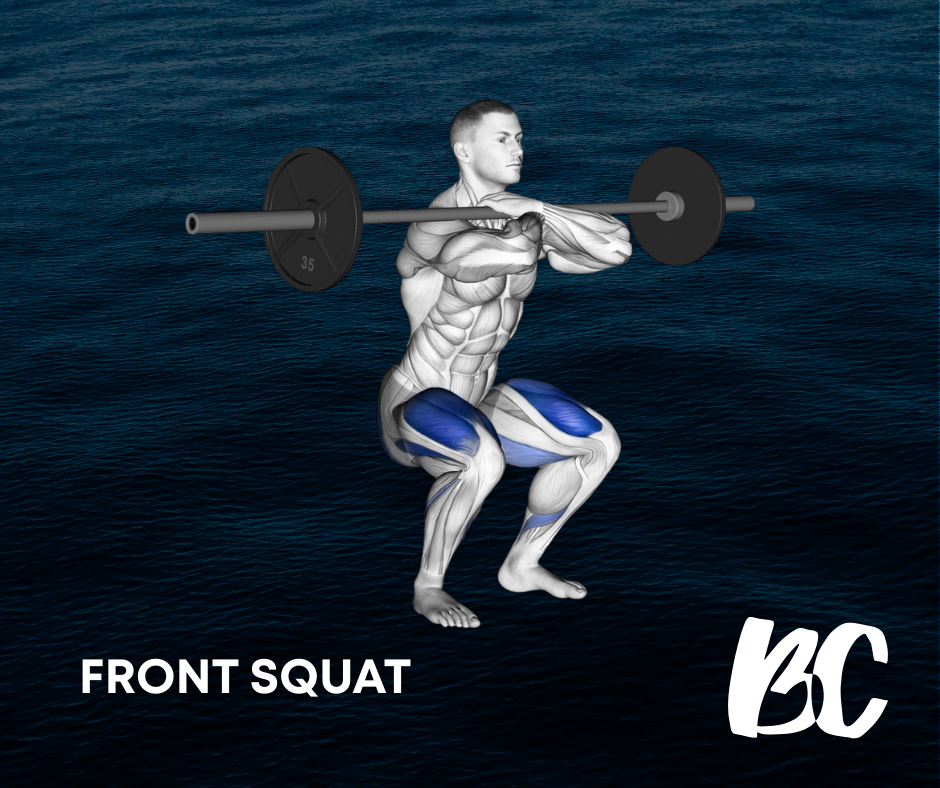
The Front Squat is a commonly used exercise in resistance training that improves strength in the quadriceps, gluteal muscles, core and upper back.
The front squat is a functional exercise that is used in everyday life and promotes an upright posture.
By shifting the weight to the front, you reduce spinal compression, protect the lower back and increase the demand on core stability.
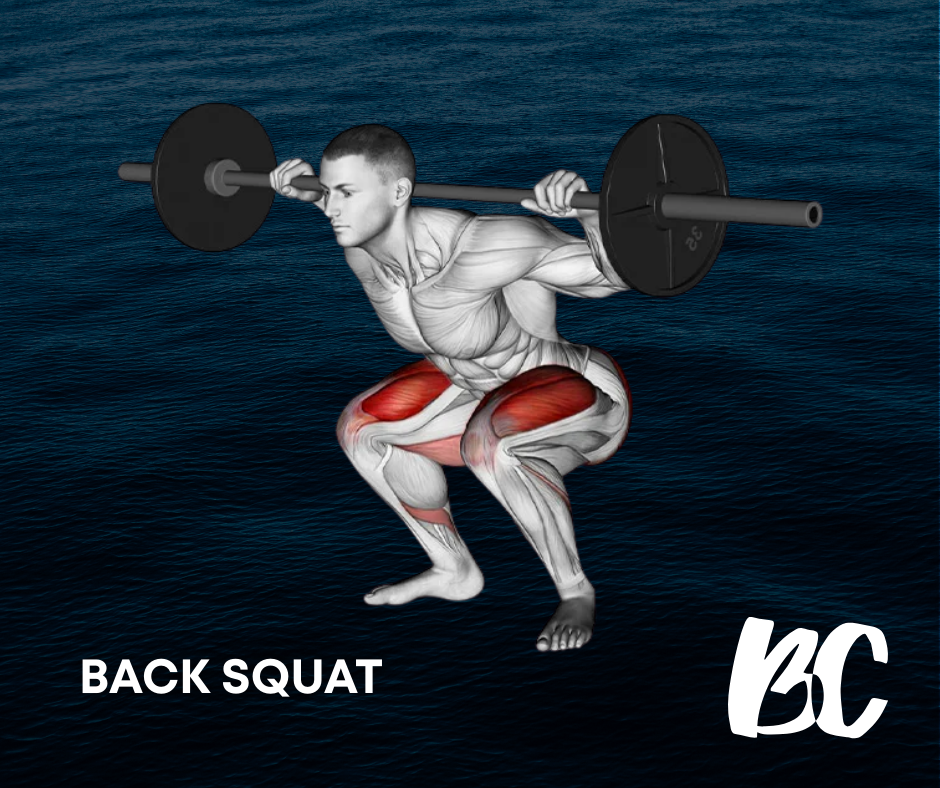
The Back Squat is a commonly used exercise in resistance training that improves strength in the quadriceps, gluteal muscles, hamstrings, core and upper back.
The back squat increases power, bone density, metabolism and improves functional ability for everyday movements.
By shifting the weight to the back, the entire posterior chain is engaged which leads to improved posture and
stability.
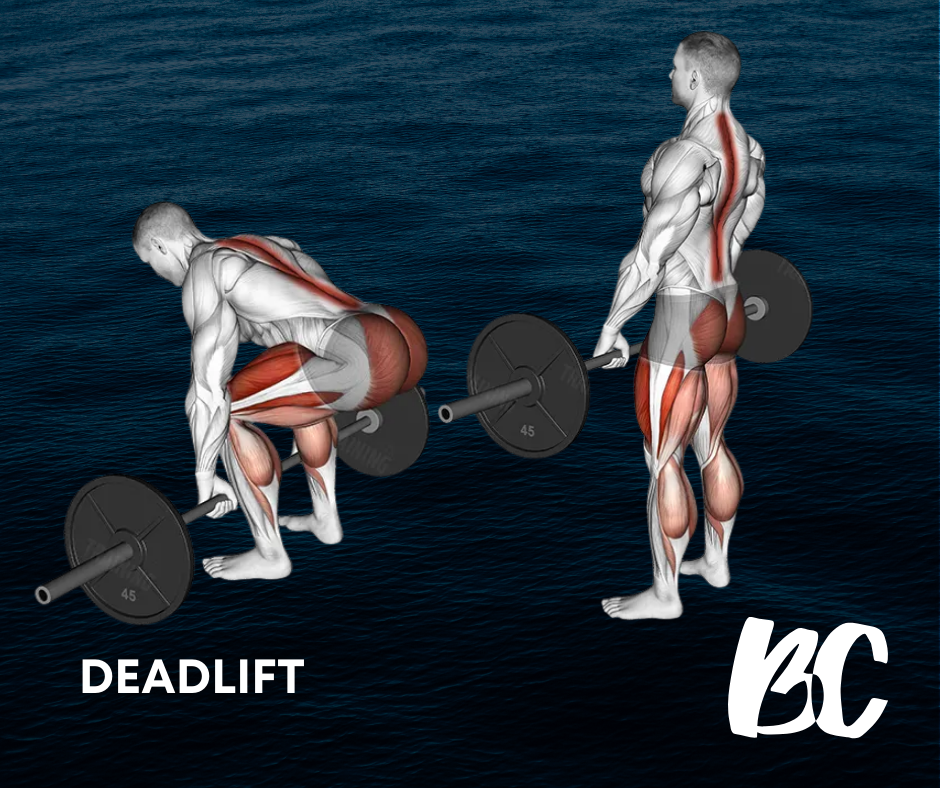
The deadlift is a commonly used exercise in resistance training that targets the posterior chain. It increases strength in the hamstrings, gluteal muscles, core and back.
The deadlift is a functional exercise that is used in everyday activity, and improves grip strength and bone density.
Deadlifting at high loads demands proper technique and core control to prevent injury but benefits posture and
athletic performance while reducing injury risk.
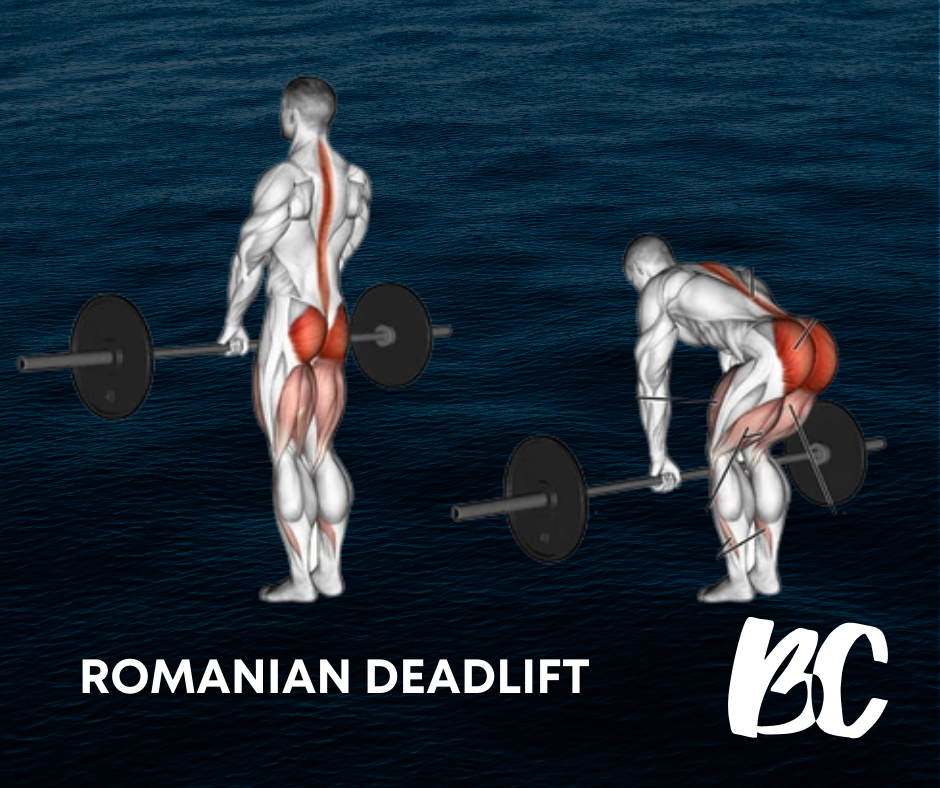
The Romanian deadlift is a commonly used exercise in resistance training that uses a hip hinge to increase strength of the back muscles, gluteal muscles and hamstrings.
The Romanian deadlift is a functional exercises that improves lifting ability in everyday activity. It targets the
posterior chain to provide stability and posture control.
Performing a Romanian deadlift at high loads demands proper technique to prevent injury but is beneficial
for general and athletic performance.
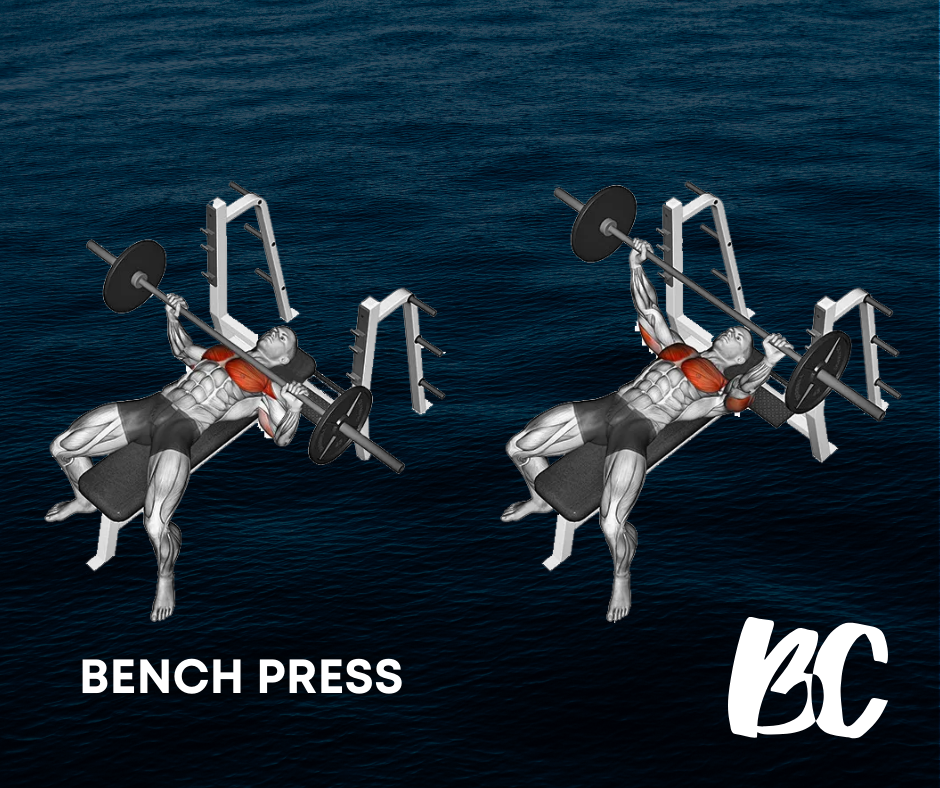
The bench press is a commonly used exercise in resistance training that improves upper-body strength in the chest, shoulders and arms.
The bench press is a functional exercise that improves pushing power in everyday activities. It increases bone density and improves core and shoulder stability.
Bench pressing at high loads can be dangerous, therefore it is important to always have a spotter with you to prevent injury.
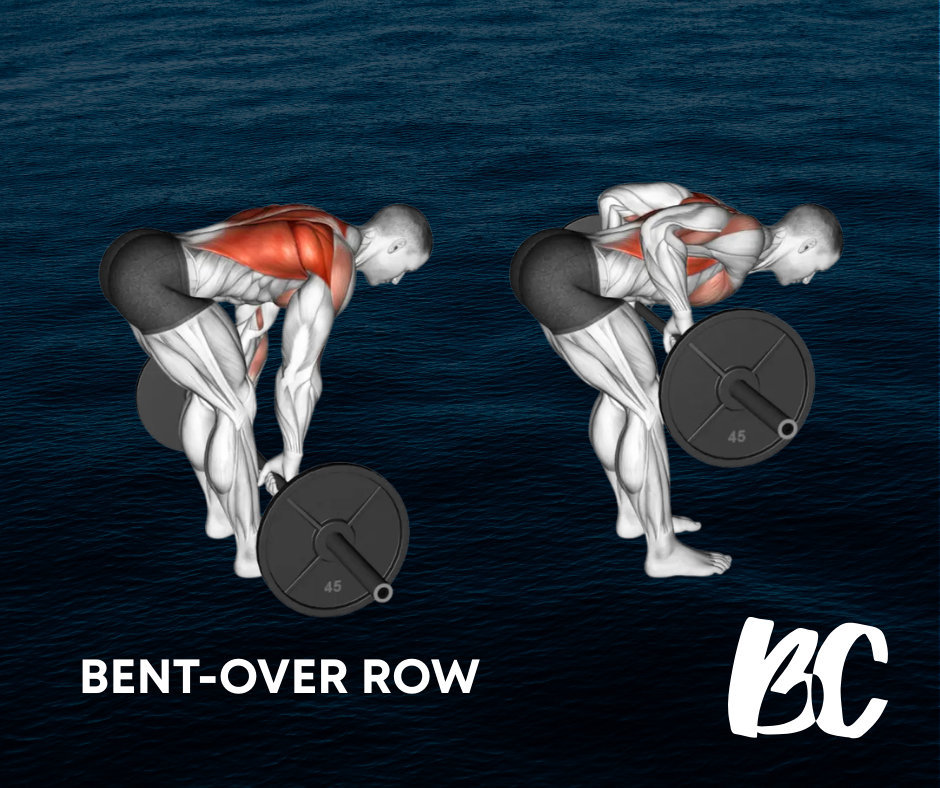
The bent-over row is a commonly used exercise in resistance training that improves upper-body strength in the latissimus dorsi, rhomboids and trapezius muscles.
The bent-over row is a functional exercise that improves pulling power in everyday activities. It enhances posture, core stability and shoulder strength.
Performing a bent-over row at high loads demands proper technique and core control to prevent injury but it highly beneficial for hypertrophy and upper back strength.
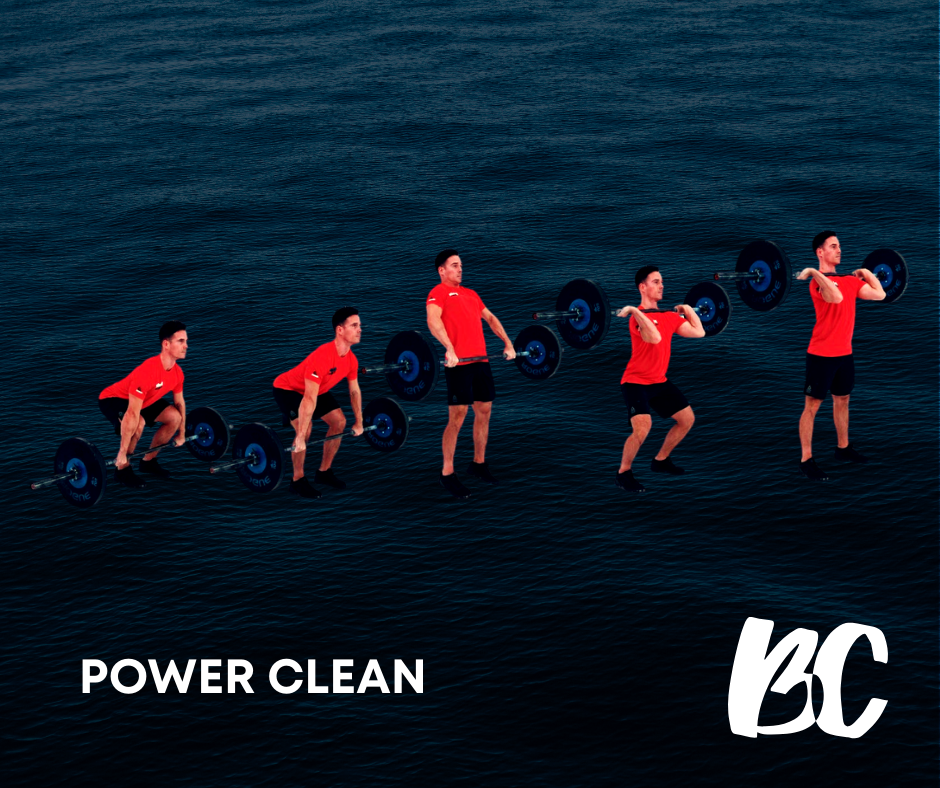
The power clean is a commonly used exercise in power training that increases explosive power, strength and speed by training muscles to produce maximum force rapidly.
The power clean engages the entire body and improves co-ordination, neuromuscular efficiency and cardiovascular endurance.
Performing a power clean at high loads demands proper technique to prevent injury but is highly beneficial for athletic performance and general functionality.
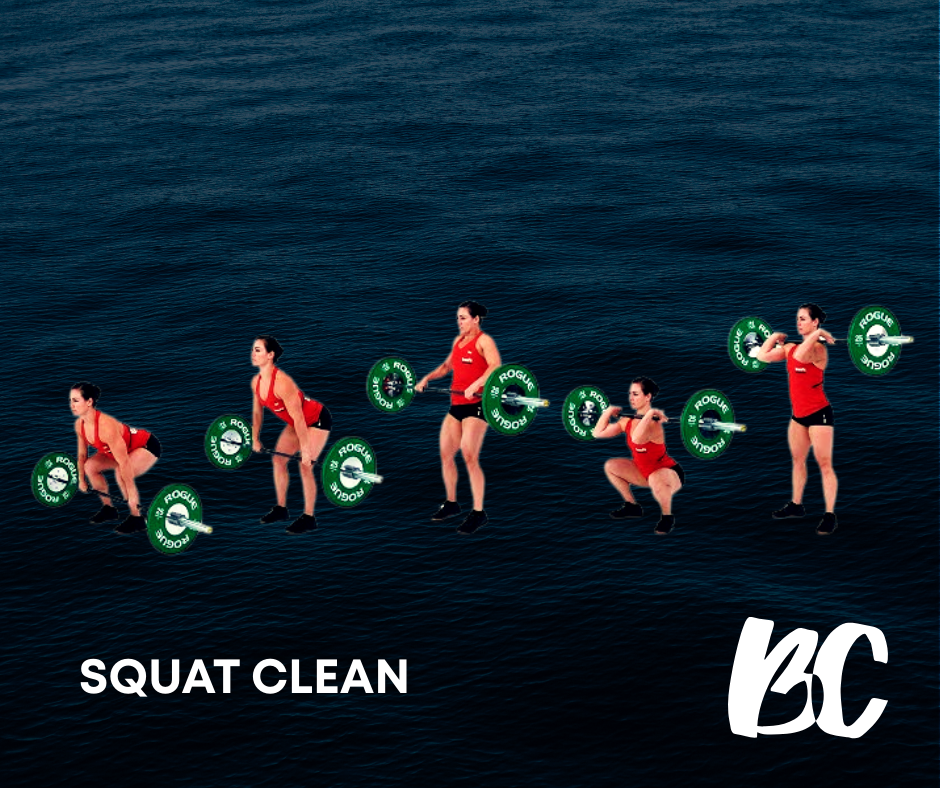
The squat clean is a commonly used exercise in power training that increases explosive power, strength and speed by training muscles to produce maximum force rapidly.
The squat clean allows the lifter to lift heavier by catching the bar in a low squat before standing up.
Performing a squat clean at high loads demands proper technique to prevent injury but is highly beneficial for athletic performance and general functionality.
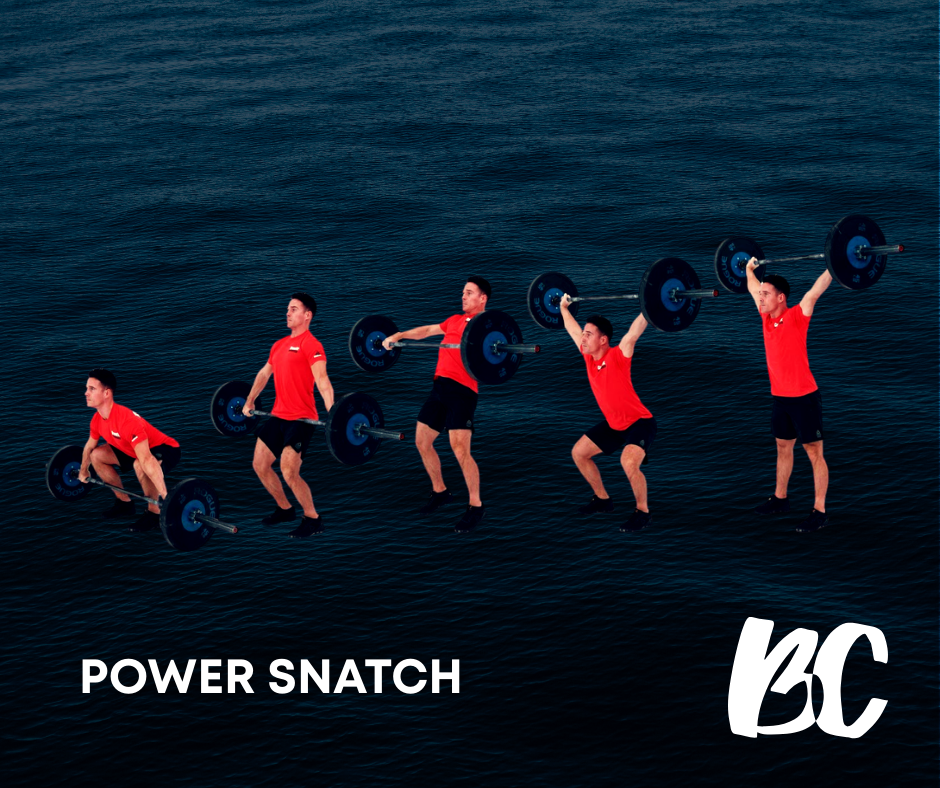
The power snatch is a commonly used exercise in power training that increases explosive power, strength and speed by training muscles to produce maximum force rapidly.
The bar is lifted directly overhead from the ground and is caught in a half to full squat position.
Performing a power snatch at high loads demands proper technique to prevent injury. While there is some debate of the functionality of the power
snatch in everyday life, it is still beneficial to improving athletic performance.
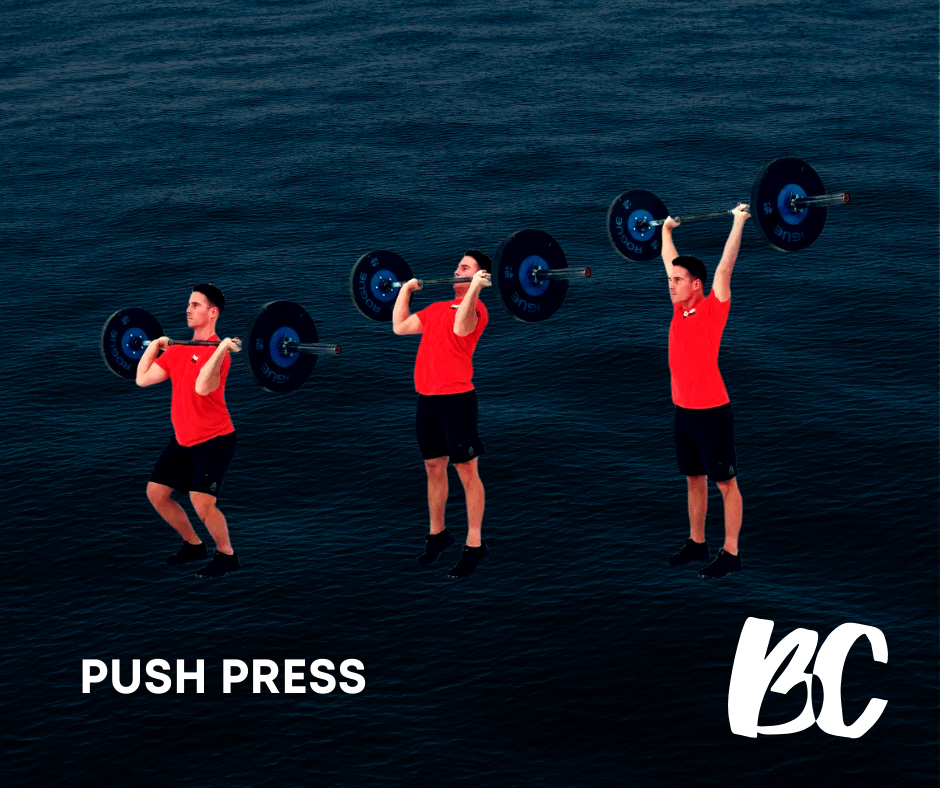
The push press is a commonly used exercise in power training that increases explosive power, strength and speed by training muscles to produce maximum force rapidly.
The push press develops upper-body power while improving shoulder mobility.
Performing a push press at high loads demands proper technique to prevent injury but is highly beneficial for athletic performance and general functionality.
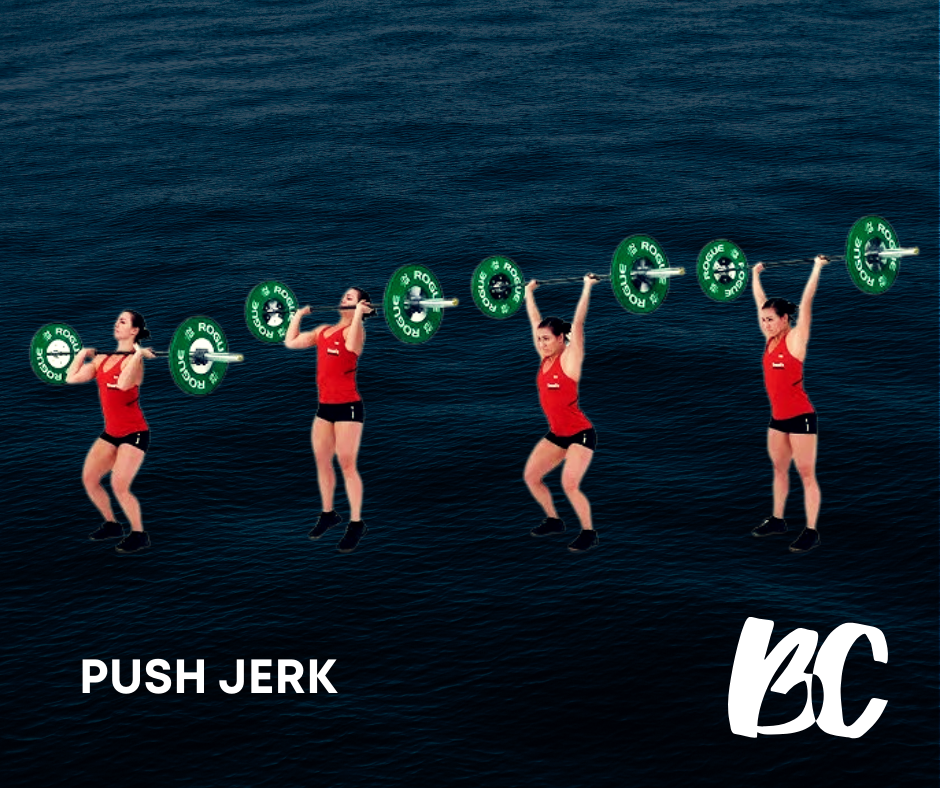
The push jerk is a commonly used exercise in power training that increases explosive power, strength and speed by training muscles to produce maximum force rapidly.
The bar is lifted from the shoulders to overhead and is caught in a half squat position, allowing the lifter to move a heavier load.
Performing a push jerk at high loads demands proper technique to prevent injury but is highly beneficial for athletic performance and general functionality.
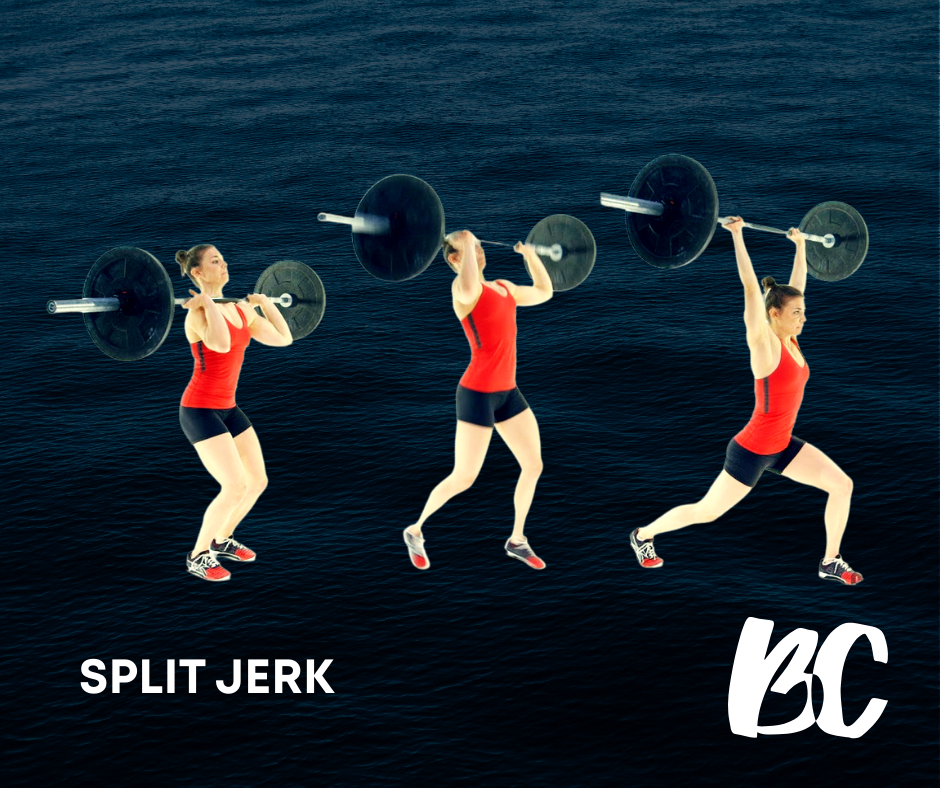
The split jerk is a commonly used exercise in power training that increases explosive power, strength and speed by training muscles to produce maximum force rapidly.
The bar is lifted from the shoulders to overhead and is caught in a split squat position.
Performing a split jerk at high loads demands proper technique to prevent injury but is highly beneficial for athletic performance and general functionality.
Structured exercise programs provide a clear and organized approach to fitness, helping individuals achieve their goals more effectively than random or inconsistent workouts. Many people struggle to see progress because they train without a plan, frequently changing exercises or following routines that lack direction. A structured program creates purpose within training by ensuring each workout contributes toward a specific goal.
One of the biggest benefits of structured training is progression. Effective exercise programs are designed to gradually increase intensity, volume, or difficulty over time. This allows the body to adapt safely and consistently, improving strength, endurance, mobility, and overall fitness. Without progression, workouts can become repetitive and ineffective, limiting long-term results.
Structured programs also improve consistency and motivation. Having a plan removes uncertainty and helps individuals stay focused on their fitness journey. Instead of wondering what workout to do each day, individuals can follow a schedule designed specifically for their goals and abilities.
Another important advantage is balance. A properly designed program includes recovery, mobility work, strength development, and cardiovascular training to create a well-rounded approach to health and fitness. This helps reduce the risk of injury while improving long-term performance.
Ultimately, structured exercise programs provide guidance, direction, and measurable progress. By following a plan designed around specific goals, individuals can train more efficiently, remain consistent, and achieve sustainable long-term results.
Progressive overload is one of the most important principles in exercise science and plays a key role in improving strength, fitness, and overall performance. The concept refers to gradually increasing the demands placed on the body during training in order to stimulate adaptation and growth.
When the body is exposed to the same level of stress repeatedly without progression, improvement eventually slows down. Progressive overload challenges the muscles, cardiovascular system, and nervous system to adapt over time, leading to increased strength, endurance, and physical performance.
There are many ways to apply progressive overload in training. Individuals can increase weight, repetitions, training volume, workout intensity, or exercise complexity. Even small adjustments over time can create significant long-term progress.
However, progressive overload must be applied carefully. Increasing intensity too quickly can lead to fatigue, poor recovery, or injury. A structured approach ensures that progression occurs safely while allowing the body enough time to recover and adapt.
Ultimately, progressive overload is essential because it drives continuous improvement. Without progression, training results may plateau. By gradually challenging the body over time, individuals can continue building strength, improving fitness, and reaching new levels of performance.
Every individual has unique goals, strengths, limitations, and fitness levels, which is why customized workout plans are far more effective than generic exercise routines. Personalized training programs are designed specifically around the individual, helping improve performance while reducing the risk of injury and burnout.
A customized workout plan considers factors such as fitness experience, schedule, recovery capacity, injuries, and specific goals. Whether someone wants to lose weight, build muscle, improve athletic performance, or increase overall health, a personalized approach allows training to be more targeted and effective.
Customized plans also improve consistency because they fit more naturally into an individual’s lifestyle. Workouts that are realistic and manageable are easier to maintain long term, helping individuals stay motivated and committed to the process.
Another major benefit is adaptability. As progress occurs, customized programs can evolve to meet changing needs and abilities. Coaches can adjust exercises, intensity, and volume to ensure continued progress while preventing plateaus.
Ultimately, customized workout plans improve performance because they focus on the individual rather than a one-size-fits-all approach. Personalized guidance helps people train smarter, remain consistent, and achieve better long-term results.
Many people believe that the key to fitness success is simply training harder, but effective fitness is not just about intensity - it is about strategy. Training smarter instead of harder focuses on quality, recovery, consistency, and efficiency rather than excessive workouts or burnout.
One of the biggest mistakes people make is believing that more exercise always leads to better results. In reality, excessive training without proper recovery can increase fatigue, reduce performance, and increase the risk of injury. Smart training emphasizes balance between effort and recovery.
Effective training programs are designed with purpose. Instead of performing random exercises or spending endless hours in the gym, smart training focuses on exercises that align with specific goals. This creates more efficient workouts that produce better results over time.
Recovery also plays a major role in smart training. Sleep, nutrition, hydration, and rest days are essential for allowing the body to repair and grow stronger. Without recovery, even the hardest training efforts can become ineffective.
Training smarter also involves listening to the body and adjusting workouts when needed. Some days require higher intensity, while others may require recovery or mobility work.
Ultimately, training smarter instead of harder creates a more sustainable and effective approach to fitness. By focusing on quality, recovery, and consistency, individuals can improve performance while maintaining long-term health and wellbeing.
An effective exercise program is more than just a collection of workouts - it is a structured plan designed to improve overall health, fitness, and performance. While fitness goals may vary from person to person, the most successful programs share several important components.
One of the key elements is goal setting. An exercise program should be designed around specific and realistic goals such as strength improvement, weight loss, muscle growth, endurance, or general wellness. Clear goals help create direction and motivation.
Another important component is progressive overload. The body adapts to training over time, which means workouts must gradually become more challenging in order to continue producing results. This progression helps improve strength, fitness, and performance safely and effectively.
Balance is also essential in a successful program. A well-rounded routine should include strength training, cardiovascular exercise, flexibility, mobility, and recovery. This balanced approach supports overall fitness while reducing the risk of injury and overtraining.
Consistency plays a major role in long-term success. Even the best exercise program will not produce results without regular participation. Sustainable routines that fit into daily life are often more effective than extreme short-term approaches.
Recovery is another critical factor. Rest days, sleep, hydration, and proper nutrition allow the body to repair and adapt after training. Without recovery, progress may slow and injury risk may increase.
Ultimately, an effective exercise program combines structure, progression, balance, and consistency. By focusing on these key components, individuals can improve performance, maintain motivation, and achieve lasting fitness results.
Many people focus heavily on workouts when trying to build muscle, but recovery is just as important as training itself. Muscle growth does not occur during exercise - it happens during the recovery process when the body repairs and strengthens muscle tissue after training.
Resistance training creates small amounts of stress and microscopic damage within the muscles. During recovery, the body repairs this tissue and adapts by making the muscles stronger and more resilient. Without proper recovery, the body may struggle to repair effectively, limiting progress and increasing fatigue.
Sleep is one of the most important aspects of recovery. During deep sleep, the body releases hormones that support muscle repair, growth, and overall recovery. Poor sleep can negatively affect performance, energy levels, and training results.
Nutrition also plays a major role in muscle recovery. Protein provides the building blocks needed for muscle repair, while carbohydrates help restore energy levels after exercise. Hydration is equally important for supporting recovery and physical performance.
Rest days are another essential part of an effective fitness routine. Many people believe that training harder every day will produce faster results, but insufficient recovery can increase the risk of overtraining, injury, and burnout.
Ultimately, recovery is essential because it allows the body to adapt and improve. Training provides the stimulus for muscle growth, but recovery is what allows progress to occur. By prioritizing sleep, nutrition, hydration, and rest, individuals can maximize performance and support long-term muscle development.
One of the most effective ways to stay consistent with fitness is by training with a clear purpose. Goal-oriented training provides direction, motivation, and structure, helping individuals remain focused on long-term progress rather than short-term motivation.
Without clear goals, many people lose interest or become inconsistent because they do not have a defined reason for training. Goals create meaning within the fitness journey and help individuals measure progress over time.
Goal-oriented training also improves motivation because it provides achievable milestones. Large goals can feel overwhelming, but breaking them down into smaller targets helps individuals stay encouraged and focused throughout the process.
Another important benefit is structure. When workouts are designed around specific goals, individuals are more likely to follow a consistent routine and track progress effectively. This creates accountability and encourages long-term commitment.
Goal-oriented training also helps improve efficiency. Rather than performing random workouts, individuals can focus on exercises and strategies that directly support their objectives.
Ultimately, goal-oriented training improves consistency because it provides purpose, direction, and measurable progress. By training with clear intentions, individuals are more likely to stay motivated and committed to long-term fitness success.
Strength training is often associated with building muscle and improving physical appearance, but its benefits extend far beyond the gym. Regular resistance training can improve overall health, daily function, mental wellbeing, and quality of life.
One of the biggest benefits of strength training is improved physical function. Building strength helps individuals perform everyday tasks more easily, from carrying groceries and lifting objects to improving posture and mobility.
Strength training also supports bone health. Resistance exercises help increase bone density, reducing the risk of osteoporosis and fractures as people age.
Another major benefit is improved metabolism. Muscle tissue requires energy to maintain, meaning individuals with more muscle mass often burn more calories throughout the day.
Mental health can also improve through strength training. Exercise has been shown to reduce stress, anxiety, and symptoms of depression while improving confidence and self-esteem.
Strength training additionally supports injury prevention by improving joint stability, balance, and movement quality. Stronger muscles and connective tissues help protect the body during physical activity and daily life.
Ultimately, strength training offers benefits that extend far beyond aesthetics. It supports long-term health, independence, confidence, and overall wellbeing at every stage of life.
Exercise is widely recognized for its physical benefits, but it also plays a powerful role in improving mental performance. Regular physical activity supports brain health, enhances focus, reduces stress, and improves overall cognitive function.
One of the main ways exercise improves mental performance is by increasing blood flow and oxygen delivery to the brain. This supports brain function and may improve concentration, memory, and decision-making abilities.
Exercise also stimulates the release of chemicals such as endorphins and dopamine, which help improve mood and reduce stress. Regular physical activity has been linked to lower levels of anxiety and depression while supporting emotional wellbeing.
Another important benefit is improved energy and productivity. Exercise can help reduce fatigue and improve mental alertness, making it easier to stay focused throughout the day.
Physical activity also supports better sleep quality, which is essential for recovery, concentration, and cognitive performance. Better sleep often leads to improved mood, focus, and mental resilience.
Ultimately, exercise supports both physical and mental health. By incorporating regular movement into daily life, individuals can improve focus, productivity, emotional wellbeing, and overall quality of life.
Functional fitness focuses on exercises that improve movement patterns used in everyday life. Rather than training only for appearance or performance in the gym, functional fitness helps individuals move more efficiently and safely during daily activities.
One of the main benefits of functional fitness is improved mobility and balance. Functional exercises often involve multiple muscle groups working together, helping improve coordination and body control.
Functional fitness also supports injury prevention by strengthening muscles, joints, and connective tissues in ways that mimic real-life movements. This can help reduce strain during activities such as lifting, bending, carrying, or climbing stairs.
Another important benefit is long-term independence and quality of life. As people age, maintaining strength, mobility, and balance becomes increasingly important for remaining active and independent.
Functional fitness additionally improves posture and core stability, which can help reduce discomfort associated with sedentary lifestyles or repetitive movement patterns.
Ultimately, functional fitness provides long-term benefits that extend beyond the gym. By improving movement quality, balance, strength, and mobility, individuals can support overall health and maintain a more active lifestyle throughout life.